- Generative AI
- Personalization
- eCommerce
- 14 min read
How Nike, Sephora, Stich Fix Personalize Results in 2026?
Published
11 June 2026Updated
17 June 2026

core insights box:
- eCommerce personalization makes every visit feel intentional, shaping a personalized shopping experience that guides the customer journey naturally.
- AI-powered personalized recommendations turn browsing history and purchase history into instant average order value growth.
- Customer data and customer segmentation unlock personalized experiences that reflect real shopper intent, not assumptions.
- Experro unifies AI search and a customer data model to deliver scalable eCommerce personalization strategy that drives conversions, loyalty, and long-term growth.
Shoppers don't experience your store as pages. They experience it as a feeling. And most of the time, that feeling doesn't change no matter how they behave.
Every click signals intent. Every scroll adds context. But the experience stays static while the shopper keeps moving.
You've seen it in your data: browsing, comparing, hesitating, leaving. No clear reason, just friction you can't quite name.
Here's what's changed: 77% of customers now expect personalization as the baseline, not a bonus. And modern shoppers don't wait for relevance to catch up. They move on.
The question isn't whether to personalize. It's whether your store responds to behavior as it happens, or simply serves the same path to everyone.
These 6 examples show exactly where the gap shows up and what closes it.
6 Real-World eCommerce Personalization Examples
Every impersonalized sale is a sale your competitor just won. The stores pulling ahead aren’t outspending you on ads, they’re outsmarting you at the moment it counts. Personalization turns browsing into buying.
And if you’re not doing it, someone else is doing it to your customers. These 6 real-world examples show exactly how.
1. Diamonds Direct: Luxury Commerce Personalization
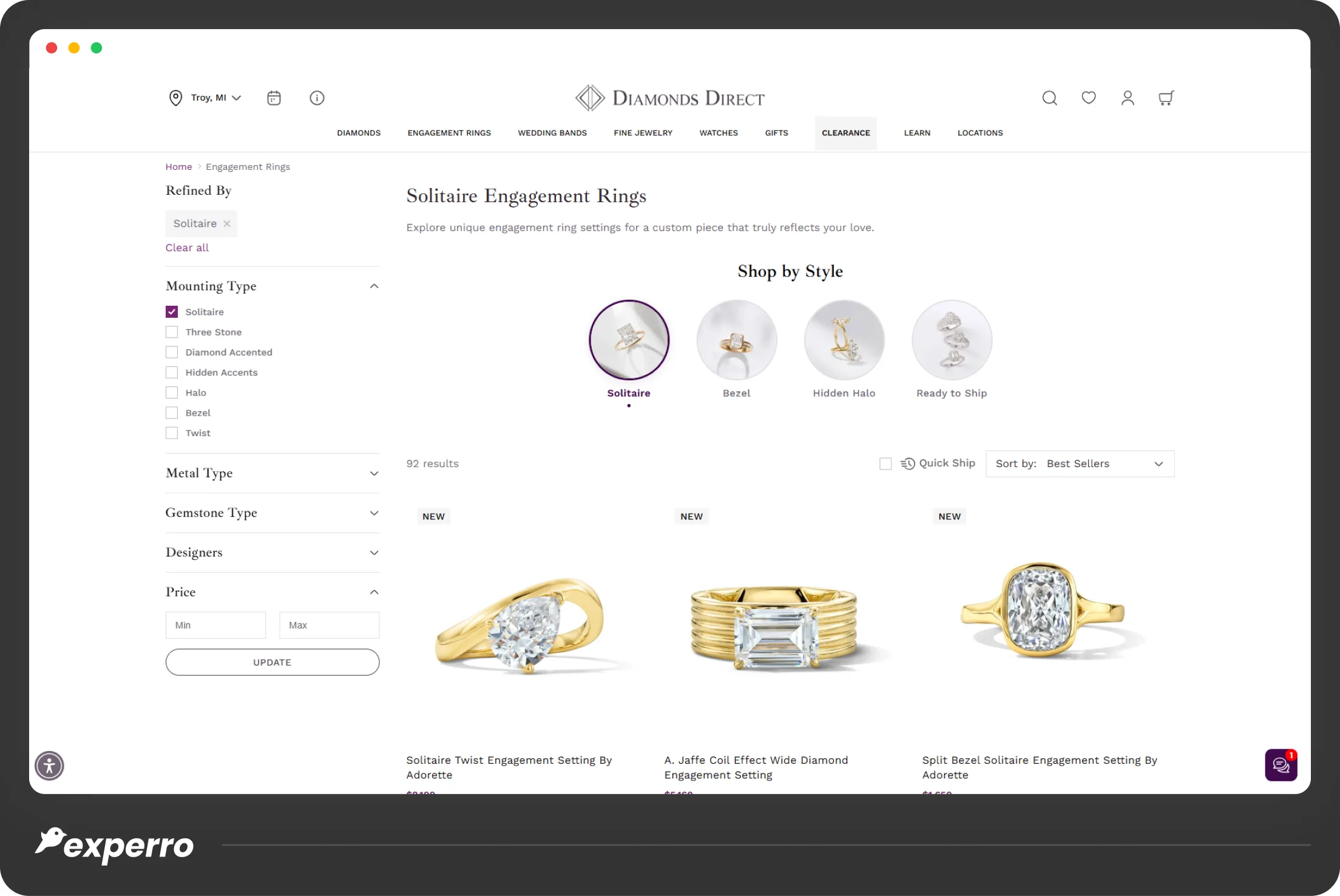
In luxury retail, the product is rarely the problem. The experience is. Luxury shoppers abandon because they're not confident enough to choose.
That was the challenge facing Diamonds Direct.
The jewelry retailer had built trust through more than 40 showrooms across 13 states. Online, however, the experience wasn't creating the same confidence.
Shoppers searching for engagement rings, wedding bands, or fine jewelry often encountered generic search results, rigid filters, and endless product choices. Instead of making decisions easier, the website sometimes made them harder.
The Challenge They Needed to Solve
Imagine spending thousands of dollars on a ring and feeling more overwhelmed after browsing than when you started.
That's exactly what Diamonds Direct wanted to prevent.
The issue wasn't inventory. The retailer offered thousands of products. The challenge was helping shoppers discover the right product without forcing them to sift through countless options.
A first-time visitor researching engagement rings had very different needs than a returning shopper comparing diamond cuts. Yet both often received similar experiences.
This is one of the biggest lessons from today's eCommerce personalization examples when brands fail to understand customer intent, product discovery becomes friction-filled, customer confidence drops, and conversions suffer.
The Personalization Strategy Behind the Experience
To bring the expertise of an in-store consultant online, Diamonds Direct partnered with Experro to create a smarter shopping experience powered by Gen AI.
Experro unified browsing behavior, purchase history, customer preferences, and loyalty signals into a single customer profile. This enabled personalization at scale, allowing every interaction to adapt based on real-time customer behavior.
Instead of relying on static rules, the experience combined intelligent search, personalized recommendations, and dynamic merchandising. As intent evolved, so did the experience. Products, collections, and content became more relevant, transforming traditional browsing into personalized product discovery.
How the Customer Journey Improved
The difference was immediate.
Shoppers found relevant products faster. Search felt more intuitive. Recommendations felt helpful rather than random. The journey became less about navigating a catalog and more about receiving personalized guidance.
This level of hyper-personalization reduced uncertainty, improved customer engagement, and created the kind of personalized shopping experience modern consumers increasingly expect.
The Business Impact
- When confidence increases, conversions follow.
- The transformation delivered:
- 42% revenue growth within one year
- 10× faster mobile site performance
- 100M+ requests served daily
- 5× faster campaign execution
- Higher conversion rates and average order value
- Improved repeat purchases and customer lifetime value
🎯 Real results: See how Diamonds Direct grows revenue by 42% - full case study here!
Among the strongest examples of personalization in eCommerce, Diamonds Direct proves that the real benefits of personalization in eCommerce come from helping customers make confident decisions at the exact moment they matter most.
2. SleekShop: Personalized Product Discovery
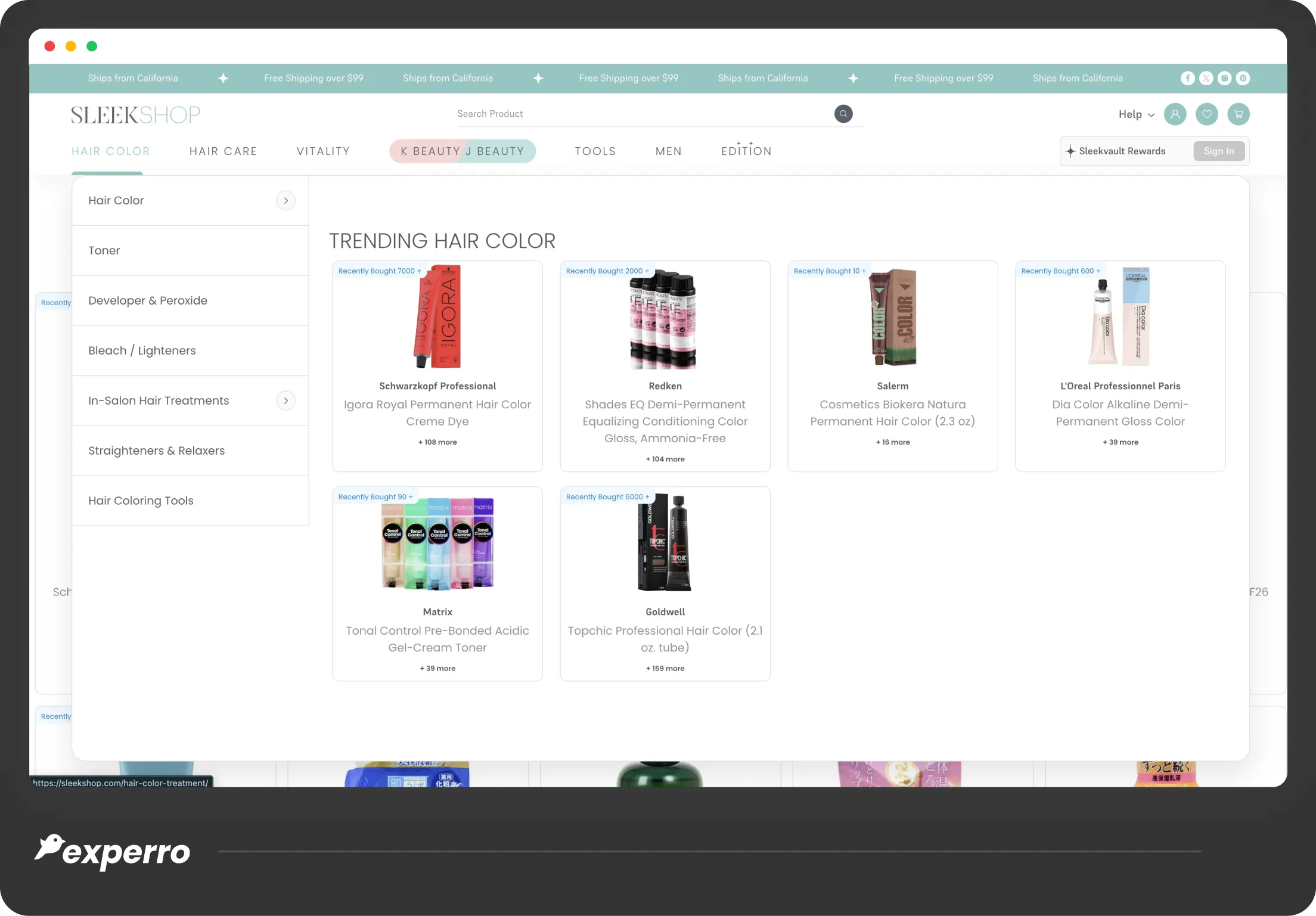
A shopper never says, "I need more products".
They say, "I can't find what I'm looking for".
That frustration was becoming a costly problem for SleekShop.
As a global beauty and personal care retailer serving customers in more than 60 countries, SleekShop offered over 80,000 SKUs and 70+ product variants.
The challenge wasn't product selection. It was helping shoppers find the right product among thousands of possibilities. What should have felt like a seamless personalized shopping experience often felt overwhelming, causing customers to browse without buying.
The Challenge They Needed to Solve
The problem wasn't search. It was discovery.
A shopper looking for a moisturizer didn't want hundreds of results. They wanted the one that matched their needs. Yet SleekShop's eCommerce website relied heavily on keyword-based search, rigid filters, and static product listings.
The experience rarely reflected customer preferences, browsing behavior, or purchase intent.
This is one of the biggest lessons from today's eCommerce personalization examples. Customers don't struggle because products are unavailable. They struggle because the most relevant products are difficult to find.
This becomes clearer when you look at how product search vs product discovery serve very different customer intentions, even though they often get treated as the same thing.
The Personalization Strategy Behind the Experience
To solve this, SleekShop partnered with Experro to transform discovery around customer intent.
Using a Gen AI-driven personalization engine, Experro unified customer data, browsing history, purchase behavior, and customer preferences into a single customer profile. This enabled 1:1 personalization at scale across the entire customer journey.
Traditional search evolved into a more intelligent experience, building on modern approaches to eCommerce search where intent matters more than keywords.
Product visibility became more relevant through searchandising in eCommerce, helping shoppers discover products aligned with what they are actually looking for instead of generic rankings.
Even navigation improved, shaped by principles of advanced eCommerce filters that prioritize intent-based exploration over rigid filtering. This reduced friction and made product discovery faster, smoother, and more intuitive.
How the Customer Journey Improved
The impact was immediate.
Customers found relevant products faster. Discovery felt effortless. Recommendations became more useful and contextual, reflecting principles highlighted in eCommerce recommendations guide.
The result was personalized product discovery that improved customer engagement, strengthened the overall customer experience, and increased confidence in purchase decisions.
The Business Impact
The transformation delivered:
- 68% higher conversions
- 46% increase in add-to-cart actions
- 8× faster site speed
- 40% reduction in operational costs
🎯 Real results: See how SleekShop achieved 68% higher conversions - full case study here!
Among the strongest examples of eCommerce personalization, SleekShop proves that the true benefits of personalization in eCommerce begin long before checkout. They begin when customers stop searching and start finding exactly what they need.
3. Nike: Predictive Search Personalization
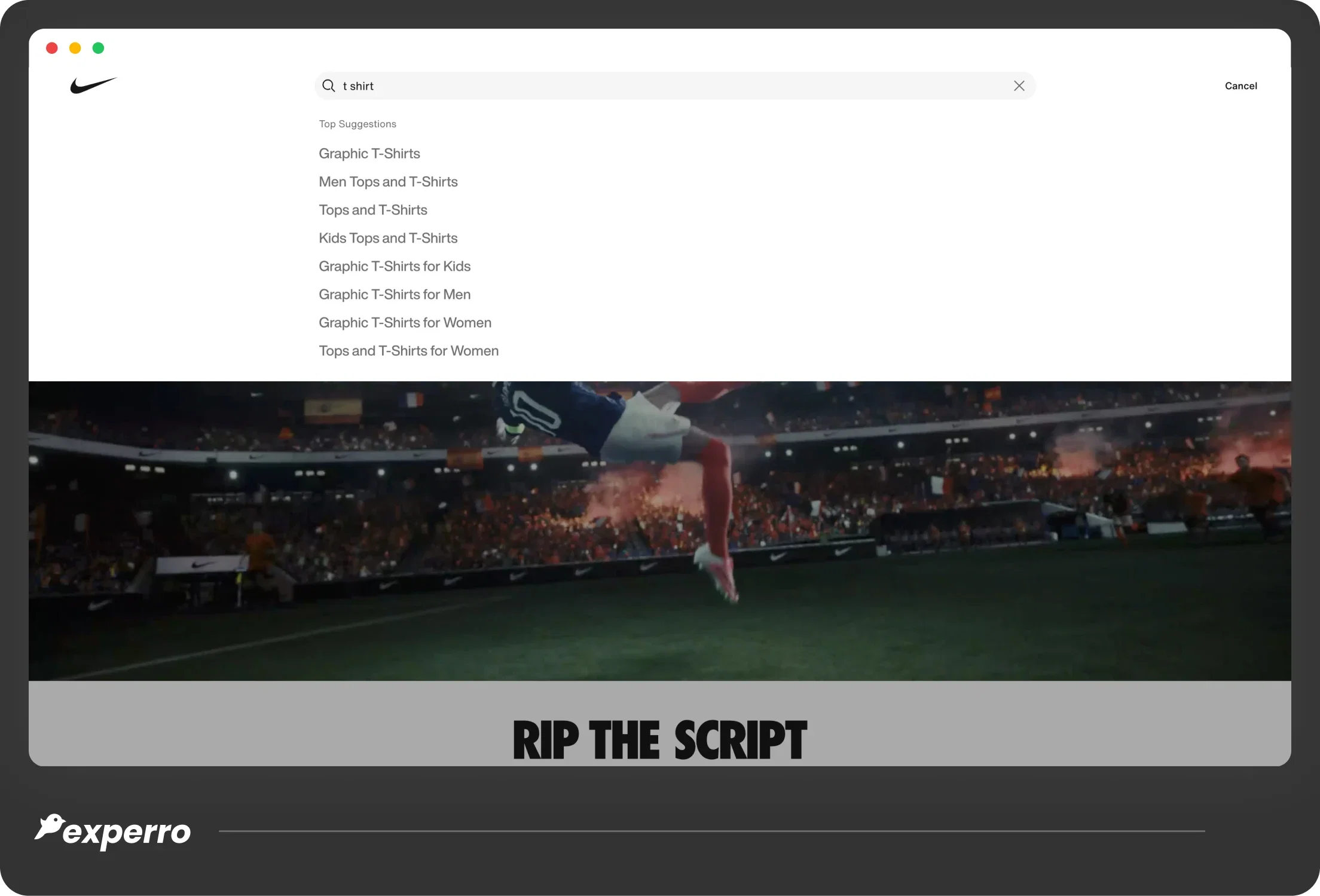
Most shoppers don't arrive with a perfectly written search query.
They start with an idea.
A few words. A product category. Sometimes just a vague intention.
The challenge is that if an online store fails to understand that intent quickly, the shopper may never reach the product they're looking for.
Nike recognized this early.
For a brand managing millions of customer interactions, search wasn't just a navigation tool. It was one of the most important moments in the entire customer journey.
Every search revealed valuable signals about customer preferences, customer interests, and buying intent. The opportunity was learning how to act on those signals instantly.
The Challenge They Needed to Solve
Traditional search waits for shoppers to finish typing.
Customers don't.
They refine queries, change direction, and explore multiple options before making a decision. Yet many search experiences still rely on exact keywords, creating friction at the very moment shoppers are trying to discover products. Autocomplete search is built to close this gap.
As highlighted across modern eCommerce personalization examples, customers expect brands to understand intent as it emerges, not after it has already been expressed.
For Nike, the challenge was clear: reduce search friction and help shoppers reach relevant products faster.
The Personalization Strategy Behind the Experience
Nike reimagined search as a real-time intelligence layer powered by AI.
Using principles similar to those explored in generative AI for personalization, the experience began responding before a shopper finished typing. Predictive suggestions evolved with every keystroke, helping customers move from intent to discovery faster.
Behind the scenes, signals such as browsing history, customer behavior, purchase behavior, and product interactions continuously informed the experience. This created a more adaptive form of personalized site search, delivering personalized search results based on context rather than keywords alone.
The approach also reflects broader shifts discussed in eCommerce trends, where relevance is increasingly delivered in real time rather than after the fact.
How the Customer Journey Improved
The result was a faster, more intuitive shopping experience.
Search became proactive instead of reactive. Discovery became easier. Shoppers reached relevant products with fewer clicks and less effort.
This level of hyper personalization in retail examples transformed search into a meaningful part of the customer experience, strengthening customer engagement long before shoppers reached product pages.
The Business Impact
- Nike’s predictive search personalization delivers measurable results:
- Faster product discovery across the eCommerce store
- Higher conversion rates driven by reduced search friction
- Improved customer engagement across product pages and category journeys
- Stronger customer experience through real-time relevance
It also supports long-term customer loyalty by making each interaction faster, easier, and more relevant, encouraging repeat visits and higher satisfaction.
4. Sephora: Personalized Product Recommendations
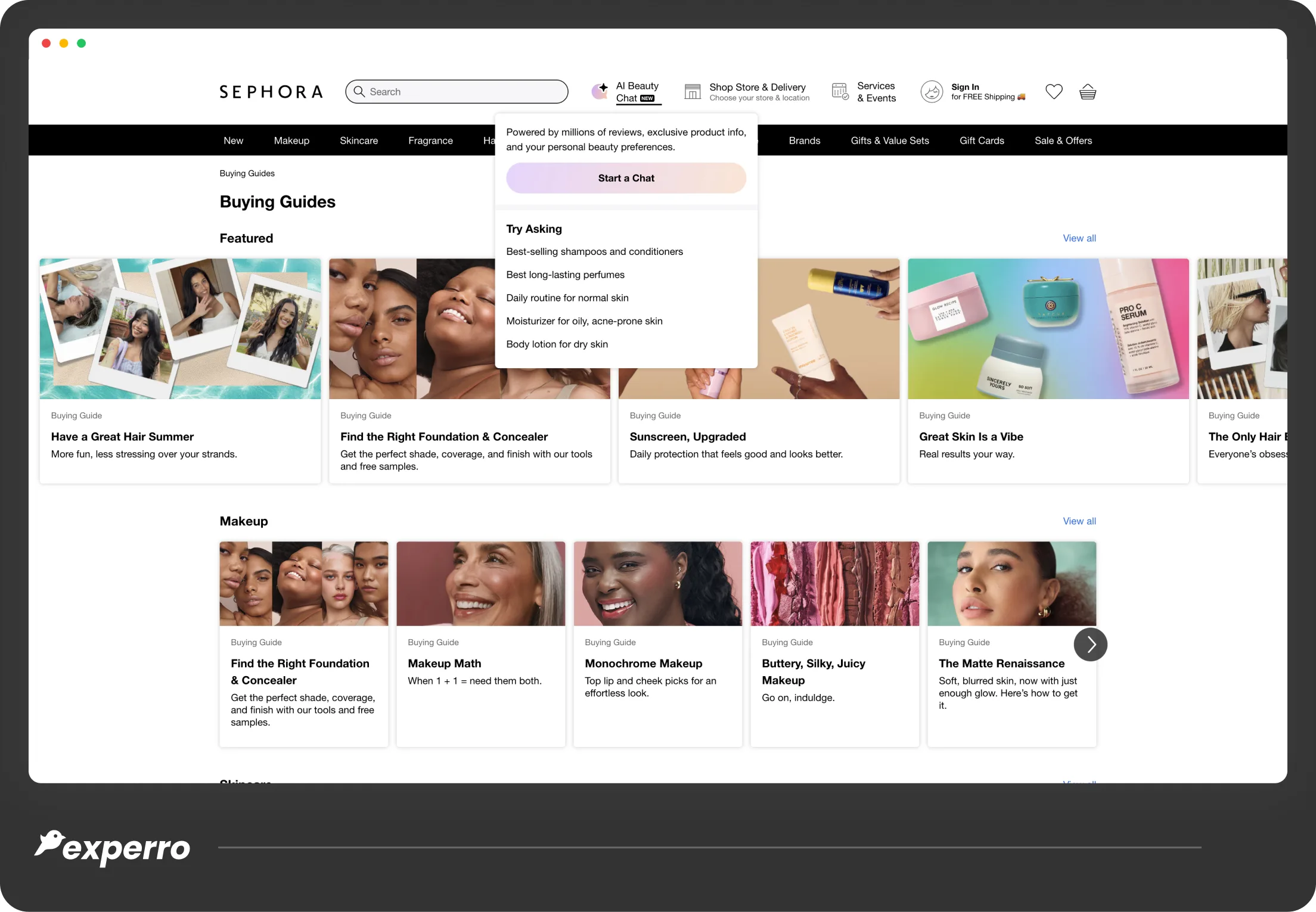
Sephora is one of the clearest eCommerce personalization examples in action. It shows how recommendations can move beyond product suggestions and become a real discovery system. The goal is simple: help every shopper find the right product faster, with less effort.
The Challenge They Needed to Solve
Sephora sits inside one of the most complex retail spaces in the world. Thousands of skincare, makeup, and beauty products sit side by side.
The problem was not choice. It was clarity.
Shoppers were not struggling to find products. They were struggling to decide. Even strong personalization in retail examples often fall into the same trap, relevance without context.
So the experience started feeling noisy instead of helpful.
Sephora needed to fix one thing: make decision-making easier, not harder.
The Personalization Strategy Behind the Experience
Sephora moved away from static recommendations and built a system that reacts in real time. It doesn’t just recommend. It observes, adapts, and responds.
This is where modern AI personalization eCommerce examples become powerful.
The experience shifts like this:
- A shopper views a product → the system builds a full routine
- A product is added → it suggests what naturally fits with it
- At checkout → it enhances value without forcing attention
Everything is powered by intent understanding through systems like semantic search and predictive search for eCommerce.
Search itself stops being static and becomes responsive.
How the Customer Journey Improved
The journey feels less like navigation and more like flow.
Shoppers move naturally from search → discovery → decision.
Filters feel lighter. Product pages feel connected. Recommendations feel like they belong in the moment, not placed randomly.
This aligns with modern types of website personalization, highlighted in types of website personalization, and improves overall digital customer experience as seen in digital customer experience.
The friction disappears. Decisions speed up.
The Business Impact
When personalization finally aligns with intent, behavior changes immediately.
Shoppers explore more confidently. They build complete sets instead of single items. They trust recommendations instead of ignoring them.
This is why eCommerce personalization examples like Sephora consistently improve performance.
It boosts conversion rates, strengthens engagement, and increases repeat purchases, supported by insights from eCommerce conversion rate optimization.
But the biggest shift is emotional.
The experience feels understood. And when that happens, shopping stops feeling like searching, and starts feeling like being guided.
5. Stitch Fix: Zero-Party Data Personalization
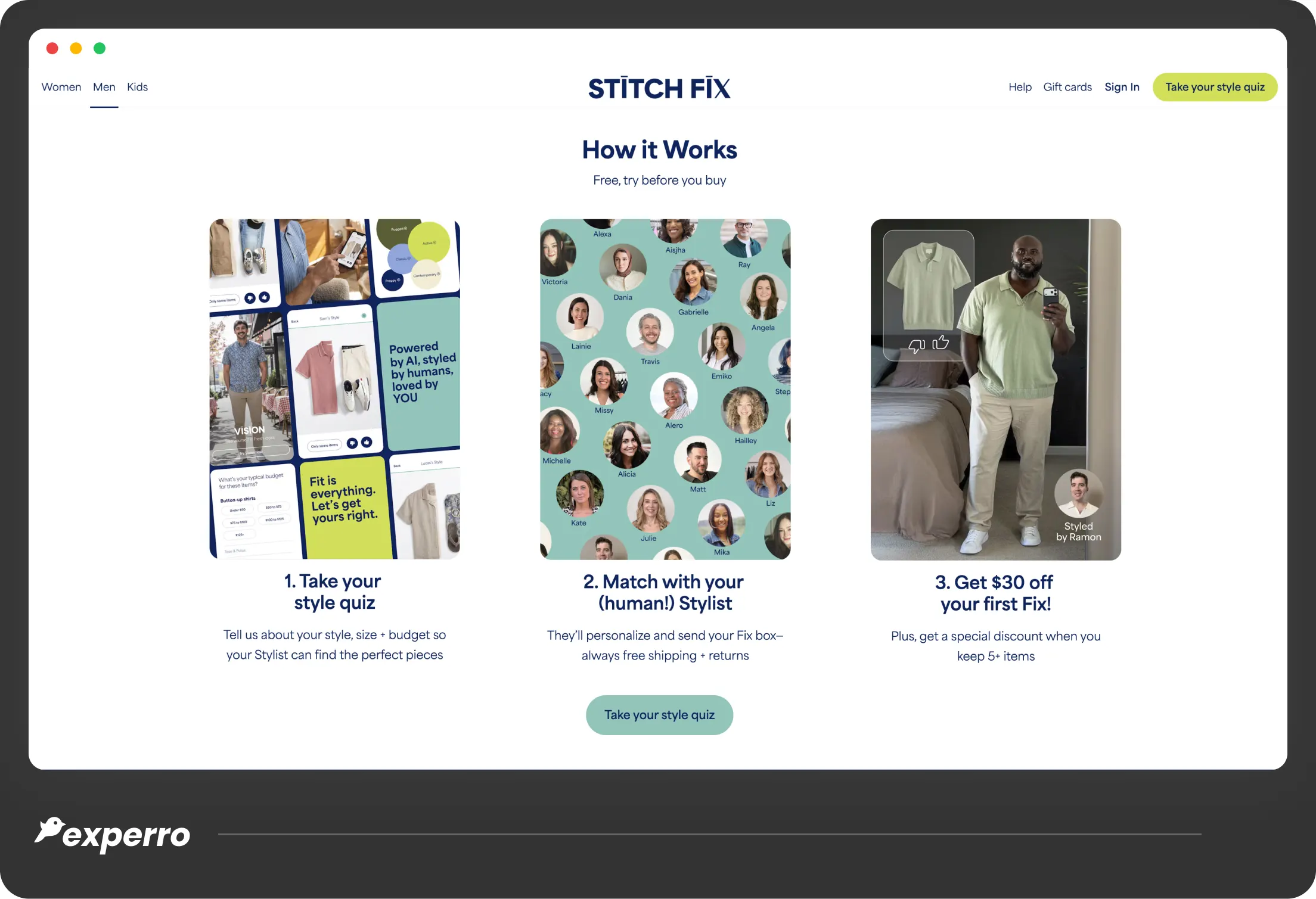
Stitch Fix doesn’t feel like a traditional fashion store. It feels more like a personal stylist that quietly learns your taste and builds outfits around you. No endless scrolling. No guesswork. Just curated recommendations that actually make sense in the moment.
That is why it stands out as one of the strongest eCommerce personalization examples because it turns shopping into guided discovery instead of random browsing.
It also reflects how modern systems are evolving beyond basic filters into intent-driven experiences, as seen in what is eCommerce agentic experience, where platforms actively assist shoppers instead of waiting for input.
The Challenge They Needed to Solve
Online fashion is not a product problem. It is a decision problem.
Shoppers rarely leave because options are missing. They leave because choices feel overwhelming.
Most personalization systems still rely on browsing behavior and past clicks. But as highlighted in why personalization fails in eCommerce, assumptions often miss real emotional intent and lead to irrelevant recommendations.
Stitch Fix faced a sharper challenge:
How do you recommend clothing when style is deeply personal, emotional, and constantly changing? The only way forward was to stop guessing and start listening.
The Personalization Strategy Behind the Experience
Stitch Fix builds its system on zero-party data, information customers willingly provide.
This reflects a major shift in eCommerce personalization strategy examples, where personalization moves from tracking behavior to capturing intent directly.
The experience includes:
- Style quizzes that feel like self-discovery, not data collection
- Preference mapping across fit, comfort, lifestyle, and dislikes
- Continuous refinement through direct customer feedback
This creates highly accurate recommendations that align with real intent, supported by predictive customer analytics, where behavioral signals and data inputs combine to improve prediction accuracy.
It also reflects search intelligence in eCommerce, where systems go beyond keyword matching to interpret meaning, context, and shopper intent for more relevant results.
How the Customer Journey Improved
The experience becomes calm, guided, and effortless.
Instead of filtering through thousands of products, shoppers receive curated outfits already aligned to their style profile.
This reflects modern hyper-personalization in retail examples, where clarity replaces overload.
It also connects with predictive search for eCommerce, where systems anticipate intent before users even finish expressing it.
Search, browsing, and discovery blend into one smooth flow that feels more like guidance than exploration.
The Business Impact
When customers define preferences upfront, everything improves:
- Higher conversions through better matching
- Stronger retention through relevance and trust
- Less decision fatigue
- Better engagement with recommendations
- Stronger personalization across the eCommerce website
Stitch Fix proves a simple truth: the best eCommerce personalization examples don’t guess customers.
They listen, adapt, and turn clarity into conversion.
6. H&M: Loyalty-based Personalization
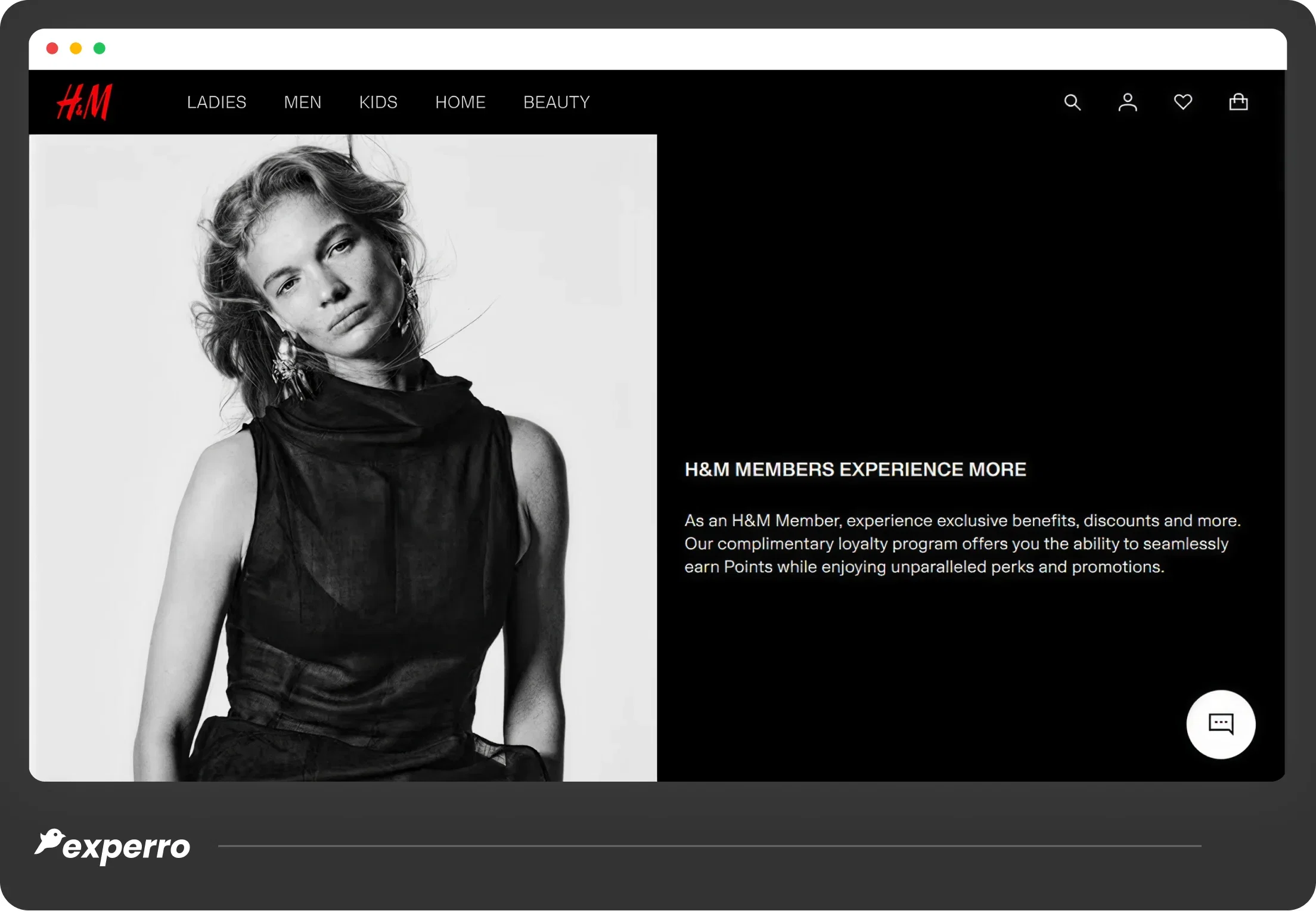
H&M is no longer treating loyalty as a points system. It has turned it into a live personalization layer that shapes what customers see, access, and experience across the journey.
This makes it a strong eCommerce personalization example, where loyalty is not separate from shopping, it is part of it.
It also reflects the evolution of modern composable commerce, where every system (loyalty, search, content, offers) works together in real time instead of in isolation.
The Challenge They Needed to Solve
Most loyalty programs feel disconnected from the actual shopping experience. Customers earn points, but nothing really changes while they browse.
H&M had a deeper problem:
How do you make loyalty visible inside the shopping journey itself?
Because without that, loyalty becomes passive, and easily ignored.
The Personalization Strategy Behind the Experience
H&M rebuilt loyalty as a real-time personalization engine.
Instead of rewarding customers after purchase, it uses loyalty data during the experience.
Key elements include:
- Frictionless sign-up that captures early customer signals
- Core and Plus tiers that separate engagement levels
- Early access, exclusive drops, and member-only pricing
- Rewards tied to both purchases and engagement behavior
This creates a dynamic personalized shopping experience, where what users see changes based on their behavior, loyalty status, and purchase patterns.
All of this runs on a unified customer data model, combining browsing behavior, purchase history, and engagement signals.
This aligns with ideas in omnichannel retail trends and predictive customer analytics, where data is continuously used to refine experiences across touchpoints.
How the Customer Journey Improved
The journey becomes more personal over time.
Returning users don’t see generic offers. They see tailored drops, relevant discounts, and products aligned with past behavior.
Search and browsing also improve, creating smoother discovery paths similar to concepts in product clustering in eCommerce, where products are grouped intelligently based on intent and behavior.
The result is a shopping experience that feels familiar, relevant, and increasingly accurate.
The Business Impact
H&M’s loyalty-based personalization delivers:
- Higher retention and repeat purchases
- Increased lifetime value through continuous engagement
- Better conversion rates from targeted offers
- Stronger satisfaction through exclusive experiences
- More accurate personalization across the eCommerce website
H&M proves a key eCommerce personalization insight loyalty becomes powerful only when it is active inside the experience, not outside it.
Your Shoppers Are Ready. Are You?
The brands in this list didn't earn loyalty by offering more choices. They earned it by making every choice easier. Through personalized search, recommendations, content, and offers, they removed friction and helped customers find exactly what they needed.
Your shoppers are giving you the same opportunity every day.
Every search, click, scroll, and purchase reveals what they want, what they're interested in, and what might bring them back. The brands that pay attention to those signals create experiences customers remember. The ones that don't risk blending into a sea of similar stores.
That's where Experro comes in.
With AI-powered search, merchandising, recommendations, and personalization, Experro helps you turn shopper behavior into experiences that feel relevant from the first click to the final purchase.
Ready to create a store customers want to return to? Contact us today and see how personalization can turn more visits into lasting customer relationships.
FAQs

With 6+ years of experience in AI, software, and digital transformation across tech, healthcare, and fashion, Rahul focuses on making complex ideas simple, clear, and actually useful. He has learned how often great ideas get lost in complexity, which is why he centers his writing on clarity, helping entrepreneurs and leaders cut through noise and make decisions with confidence.
Subscribe to Our Newsletter!
Get the latest insights delivered straight to your inbox.
Recommended Reads